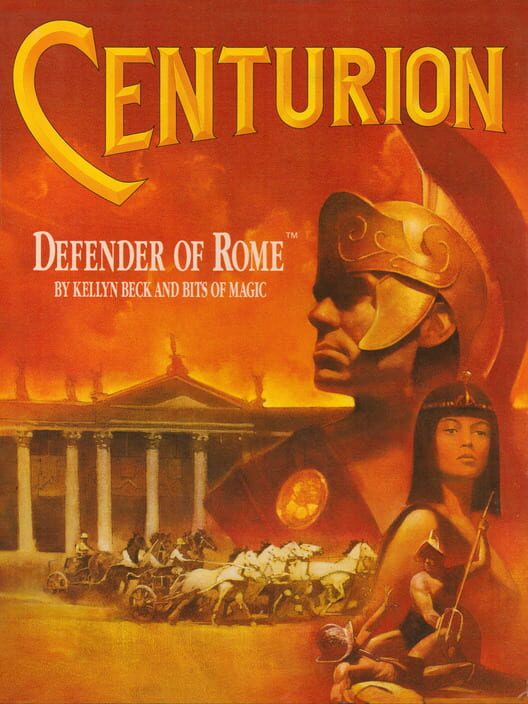
Centurion: Defender of Rome
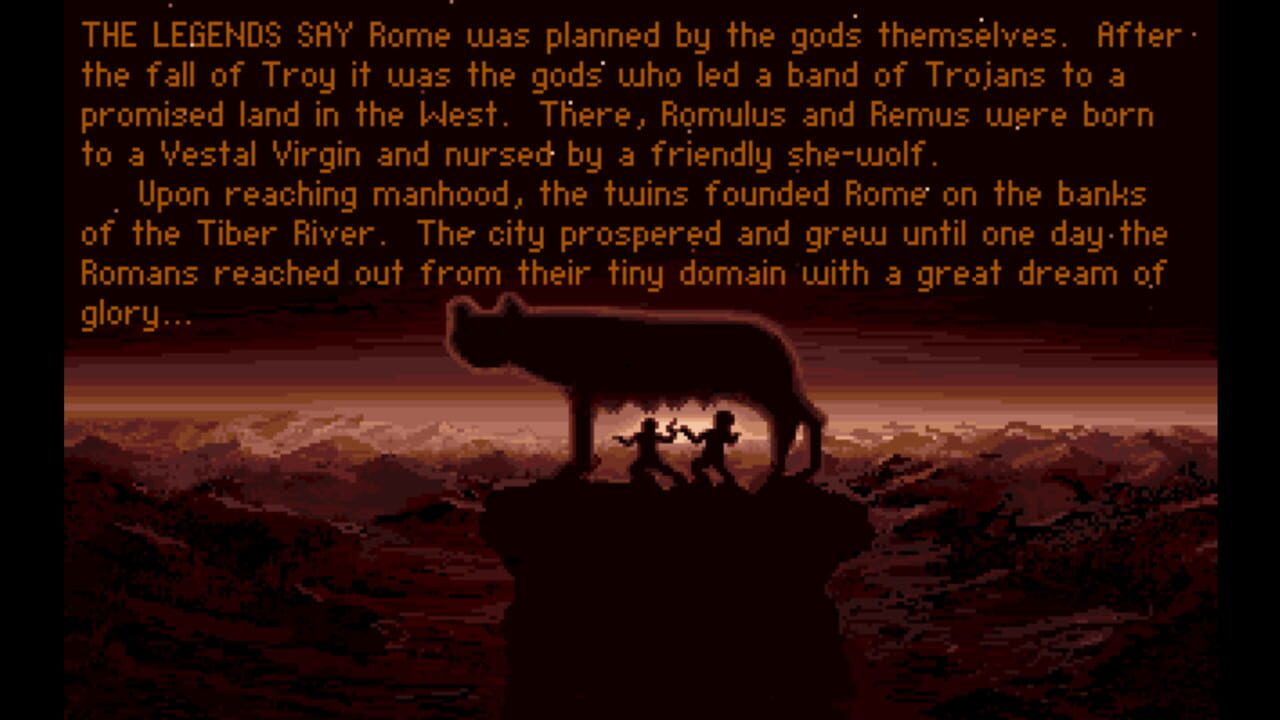
The year is 275 B.C. Through conquest and careful diplomacy, the Roman republic has brought the petty kingdoms and city-states of Italia under its control. This is the moment at which the heirs of Romulus and Remus step onto the world stage. This is the humble beginning of an empire that will one day cover most of Europe, Asia Minor, and North Africa. As an ambitious young officer, you duty is to defend Rome. Your hope is to become Caesar. Your fate - to rule the world.
SELECT ROM VERSION
Choose your preferred language or region
NO ROM
This game doesn't have a ROM file available yet. Please check back later.
Loading emulator...
Game Controls
Default
Game Controls
Default- D-Pad UpDpad-Up↑
- D-Pad DownDpad-Down↓
- D-Pad LeftDpad-Left←
- D-Pad RightDpad-Right→
- AAA
- BBS
- CCD
- StartStartENTER
- D-Pad UpDpad-Up↑
- D-Pad DownDpad-Down↓
- D-Pad LeftDpad-Left←
- D-Pad RightDpad-Right→
- AAA
- BBS
- CCD
- XXQ
- YYW
- ZZE
- ModeModeSHIFT
- StartStartENTER
About The Retro Game
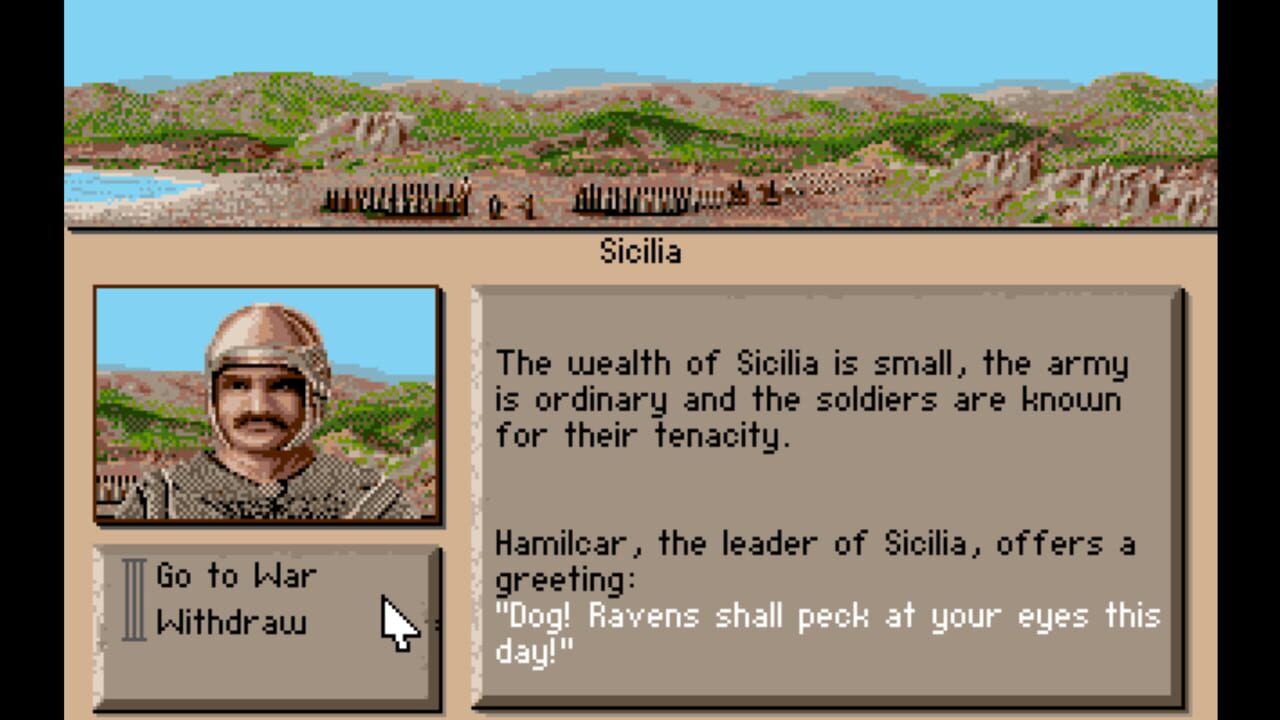
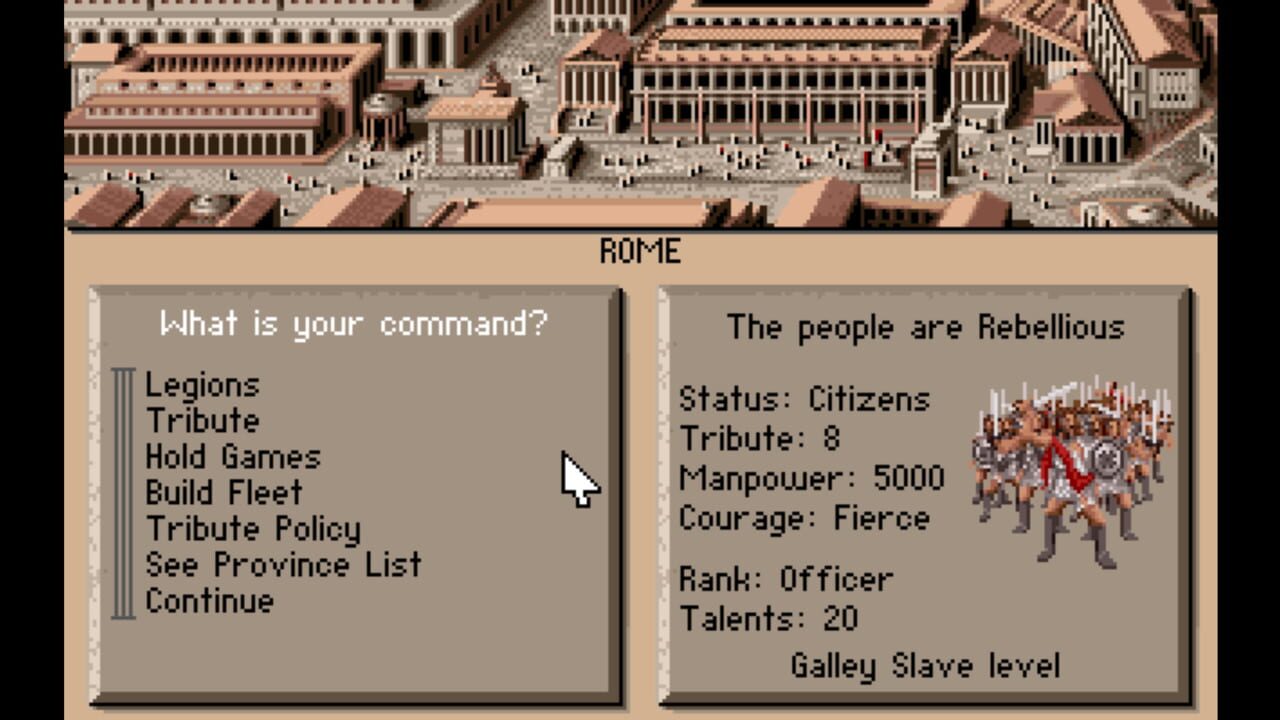
Centurion: Defender of Rome blends grand strategy, real‑time battles, and role‑playing elements into a cinematic campaign of Roman expansion. You manage legions on a detailed map of the Mediterranean, balance conquest with diplomacy, and oversee the growth of the Republic into an empire. Naval engagements, gladiatorial games, chariot races, and political negotiations all feed into your rise from minor officer to would‑be Caesar, making every decision feel like a step toward glory or ruin.
Released in 1990, it stood out on the Sega Mega Drive/Genesis for offering a PC‑style strategy experience on a home console better known for arcade action. Its mix of turn‑based empire management with real‑time combat sequences, all wrapped in a strong historical theme, was unusually ambitious for the era. The game’s use of detailed pixel art maps, atmospheric music, and evocative text gave players a vivid sense of commanding Rome’s destiny and helped cement it as a cult classic among early strategy fans.
Centurion: Defender of Rome is remembered for introducing many console players to deeper, historically grounded strategy gameplay years before that became common. Its focus on Roman politics, military structure, and famous regions of the ancient world gave it educational value alongside entertainment. The game’s attempt to capture the full sweep of Roman power—from Senate intrigue to battlefield tactics—showcased how far designers could push limited 16‑bit hardware to tell an expansive, empire‑spanning story.
Screenshots